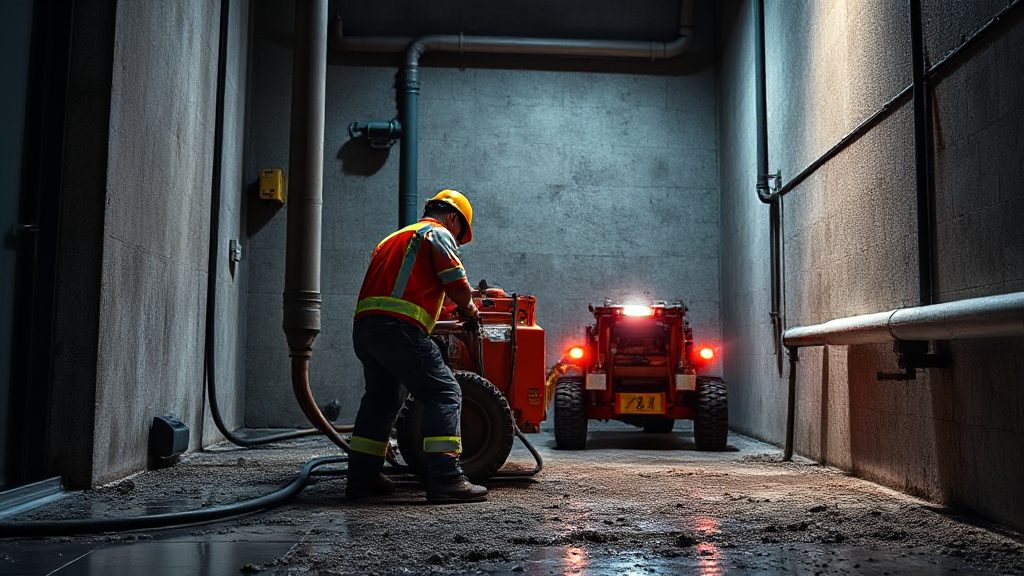
Fixing a Blocked Drain in 25 de Março: A Troubleshooting Path for Beginners
By the end of this article, you will know exactly what to check when a drain in the 25 de Março area keeps backing up even after you have tried the obvious fixes, and you will know when to stop guessing and call a professional desentupidora 25 de Março. The 25 de Março district is one of São Paulo’s busiest commercial corridors, and its older mixed-use buildings create plumbing patterns that beginners often misread. This is a troubleshooting session, not a sales pitch: I teach this to first-time building managers and shop owners, and the questions below are the ones that actually solve the problem.
Why does the drain keep coming back after you plunge it?
Because a plunge only moves the clog, it does not remove it. In the 25 de Março area, most repeat blockages are caused by grease combined with paper or wipes that coat the pipe wall and narrow the passage. You clear the center, water flows for a day, then the same ring of debris catches new material and closes again. The clog is a coating, not a plug, and that changes your whole approach.
Ask yourself three diagnostic questions before you touch the drain again:
- Does the water drain slowly in every fixture on that line, or only one? Multiple fixtures point to a shared branch line, not a local trap.
- Does the backup smell like sewage or like soap? Sewage smell suggests a venting or main-line issue, not a simple sink clog.
- Does it happen after rain? If yes, you may be dealing with stormwater intrusion into the sanitary line, which is common in older commercial streets.
If two or more answers point to a shared line, stop using chemical drain openers. Caustic products sit in the pipe, damage older PVC and cast iron, and can splash back when the line is finally cleared. A technician from a desentupidora 25 de Março São Paulo SP team will use mechanical tools that physically remove the coating instead of dissolving part of it.
What should you check before calling anyone?
Before you call, do a five-minute check that saves time and money. Locate the cleanout cap, usually a round threaded plug near the base of a wall or in a floor box. If you can open it safely, look for standing water: standing water in the cleanout means the blockage is downstream, in the main line, and no amount of sink plunging will fix it. Also check whether any floor drain in a storage room or back corridor is overflowing, because in 25 de Março many shops have rear drains that nobody watches.
Write down what you observe: which fixtures back up, whether the water is gray or dark, and whether the smell is stronger in the morning. That short record is exactly what a technician needs to choose the right tool on arrival. Good notes cut diagnosis time in half and prevent unnecessary digging.
Which tool actually matches your blockage?
Beginners tend to assume every clog needs the same machine. In practice, the tool must match the pipe diameter, the material and the type of obstruction. Here is the comparison I use when training new staff at commercial properties in the 25 de Março area.
| Tool | Best for | Watch out for |
|---|---|---|
| Hand auger (manual snake) | Sinks, urinals, short trap runs | Too short for branch lines beyond 5–6 meters |
| Electric drain snake | Branch lines and floor drains up to about 15 meters | Can scratch older cast iron if the wrong head is used |
| Hydro-jetting | Grease coating, scale, roots in main lines | Requires correct pressure; too much pressure damages weak pipes |
| Vacuum truck | Heavy solids, septic and grease trap cleaning | Needs vehicle access, which is tight on 25 de Março streets |
If your building has a grease trap, the trap itself may be the source. A full trap sends grease downstream and creates the exact coating problem described earlier. Cleaning the trap is preventive maintenance, not emergency work, and it is far cheaper than repeated jetting. Ask whether the property has a maintenance schedule; if nobody can answer, that is your real problem.
When is hydro-jetting the right call?
Hydro-jetting uses high-pressure water to scour the full circumference of the pipe. It is the correct choice when the line is coated with grease, when mineral scale has narrowed an old galvanized pipe, or when roots have entered a joint. It is not the right first choice for a single sink with a hair clog, and it should not be used on pipes that are already cracked or collapsed. A trained operator will camera-inspect the line when the blockage is stubborn, because jetting without inspection can turn a clog into a collapse.
In dense commercial blocks, access is the hidden constraint. A jetting truck needs a safe stopping position, and on 25 de Março that often means coordinating with the building’s loading zone or scheduling early morning work. Mention access conditions when you call so the crew brings the right equipment the first time. Teams that serve the area regularly already know these constraints, which is why a local desentupidora em 25 de Março São Paulo SP is usually faster than a company driving in from another district.
What does a proper emergency response look like from your side?
A good emergency response is a sequence, and you can evaluate it as it happens. First, the technician confirms which line is affected and protects the floor with containment. Second, they open the correct cleanout rather than dismantling a fixture. Third, they clear the line and verify flow with a test flush. Fourth, they show you what came out, because the debris tells you whether the cause was grease, roots, wipes or a foreign object. Verification and debris review are what separate a repair from a temporary fix.
You should also receive a clear explanation of recurrence risk. If the line is old cast iron with root intrusion, clearing it buys time, but a camera inspection and possibly a lining or replacement decision will follow. If the problem is a missing or blocked vent, no amount of snaking will stop the gurgling, because the trap is being siphoned. Ask specifically: was the vent checked? A technician who cannot answer that question has not finished the diagnosis.
How do you prevent the next blockage?
Prevention in a busy commercial building is mostly about what goes down the drain and who watches it. Keep a simple log of every backup with date, fixture and outcome. Train cleaning staff to report slow drains immediately, because a slow drain is a warning and a backed-up drain is an emergency. Install strainers in every floor drain and clean them weekly. If your property has a grease trap, schedule cleaning based on volume, not on a vague annual habit.
For older buildings, ask for a preventive inspection before the rainy season. Stormwater intrusion and root growth both worsen with heavy rain, and a camera inspection in the dry months is cheaper than an emergency call at night. The cost trade-off is straightforward: preventive maintenance is predictable, while emergency work carries after-hours premiums and business interruption. Interruption cost usually exceeds the plumbing cost for retail units in this district.
Finally, keep a short list of verified contacts, including a 24-hour service, and post it where staff can find it. When a drain backs up at closing time, nobody should be searching the internet in a panic. The result you should have by the end of this troubleshooting path is simple: you know which questions to ask, which tool matches your symptom, and when to hand the problem to a professional instead of repeating the same temporary fix.